Custom N₂O Chromosome Treatment System for the Chinese Academy of Sciences Institute of Genetics and Developmental Biology
The Institute of Genetics and Developmental Biology (IGDB), Chinese Academy of Sciences (CAS) is one of China’s premier national research institutes dedicated to genetics, developmental biology, plant science, genomics, and modern agricultural biotechnology. Since its establishment, the institute has played a leading role in advancing crop improvement, molecular breeding, genome research, and sustainable agriculture, supporting national priorities in food security and agricultural innovation.

Many of the institute’s research programs depend on accurate chromosome preparation for plant genetics and genomics studies. Producing high-quality chromosome samples is essential for applications such as karyotype analysis, genome mapping, chromosome engineering, and molecular breeding.
To support these advanced research activities, Beijing Generalway developed a custom negative-pressure vacuum N₂O chromosome treatment system that provides precise pressure control and stable experimental conditions for chromosome enrichment, helping researchers improve both laboratory efficiency and experimental reproducibility.
The Challenge
Plant genomics and cytogenetics research require highly standardized experimental conditions to produce reliable chromosome preparations for downstream genetic analysis.
During chromosome enrichment, plant cells must be arrested at metaphase, when chromosomes are fully condensed and suitable for detailed microscopic examination. Achieving consistent metaphase arrest depends on accurate control of nitrous oxide (N₂O) pressure, treatment time, and environmental stability.
For the CAS Institute of Genetics and Developmental Biology, the equipment needed to:
* Maintain precise N₂O pressure throughout chromosome treatment
* Produce highly repeatable chromosome enrichment results
* Support high-throughput research programs
* Improve sample quality for genome and chromosome analysis
* Ensure safe laboratory operation during pressurized gas treatment
* Reduce manual intervention through automated process control
* Provide reliable long-term operation for intensive research use
The institute required a dedicated scientific instrument capable of meeting the rigorous standards of a national genetics research center.
Our Solution
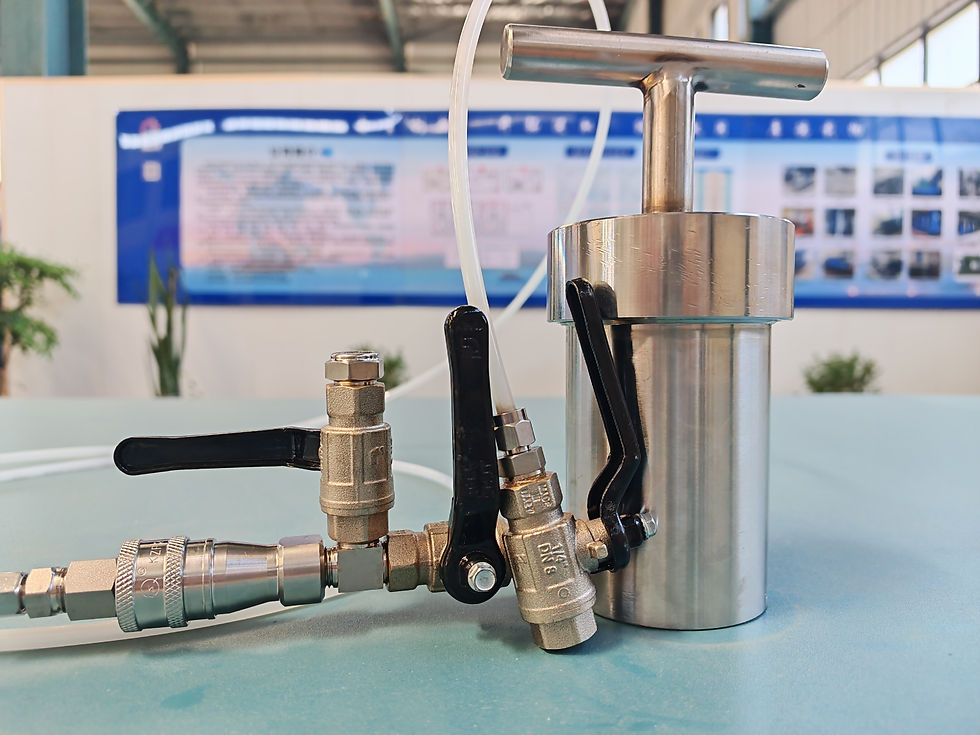
Beijing Generalway engineered a custom negative-pressure vacuum N₂O chromosome treatment system specifically designed for high-precision plant genetics and genomics laboratories.
The system precisely regulates nitrous oxide pressure inside a sealed treatment chamber, enabling dividing plant cells to be consistently arrested at metaphase for efficient chromosome enrichment. This produces high-quality chromosome samples suitable for applications including karyotyping, chromosome structure analysis, genome mapping, molecular breeding, and germplasm characterization.
An intelligent pressure control system automatically monitors and regulates treatment conditions throughout the entire experimental cycle, minimizing operator variability while improving experimental consistency and repeatability.
To support large-scale research programs, the equipment accommodates multiple experimental samples simultaneously, allowing laboratories to increase throughput without sacrificing treatment accuracy.
The system also incorporates comprehensive safety protection features and an intuitive control interface, ensuring reliable operation while providing researchers with a safe and efficient experimental platform.
Equipment Supplied
* Application: Plant Genetics & Cytogenetics Research
* Product Supplied: Negative-Pressure Vacuum N₂O Chromosome Treatment System
* Research Applications: Genome Mapping, Chromosome Analysis, Molecular Breeding, Germplasm Identification
* Treatment Medium: Nitrous Oxide (N₂O)
* Control Features: Intelligent Pressure Control and Automated Operation
* Key Features: Multi-Sample Processing, High Repeatability, Laboratory Safety Protection
* Industry: National Research Institutes & Life Sciences
Results
Following installation, the chromosome treatment system significantly improved the efficiency and consistency of chromosome preparation across multiple plant genetics research programs.
Project benefits include:
* Stable metaphase chromosome enrichment
* Improved chromosome preparation quality
* Higher repeatability for genomics research
* Increased laboratory throughput through multi-sample processing
* Reduced operator variability via automated pressure control
* Safe and reliable operation for pressurized laboratory applications
* Improved support for genome mapping and molecular breeding research
* Enhanced productivity for national scientific research programs
The completed system has become an important component of the institute’s plant genetics research infrastructure, providing reliable sample preparation for advanced genomics, chromosome biology, and agricultural biotechnology studies.
Why This Project Matters
Advances in plant genomics are transforming modern agriculture by enabling faster crop improvement, stronger disease resistance, and greater resilience to environmental challenges. Reliable chromosome preparation remains a critical step in many of these research programs, making specialized cytogenetics equipment essential for leading research institutions.
The Chinese Academy of Sciences Institute of Genetics and Developmental Biology project demonstrates how customized laboratory equipment can improve chromosome enrichment through precise environmental control and intelligent automation. By delivering consistent, repeatable experimental conditions, the system supports high-quality scientific research while increasing laboratory productivity.
The project provides an excellent reference for national laboratories, agricultural research institutes, universities, seed companies, and biotechnology organizations seeking advanced equipment for plant cytogenetics, genomics, and molecular breeding applications.


