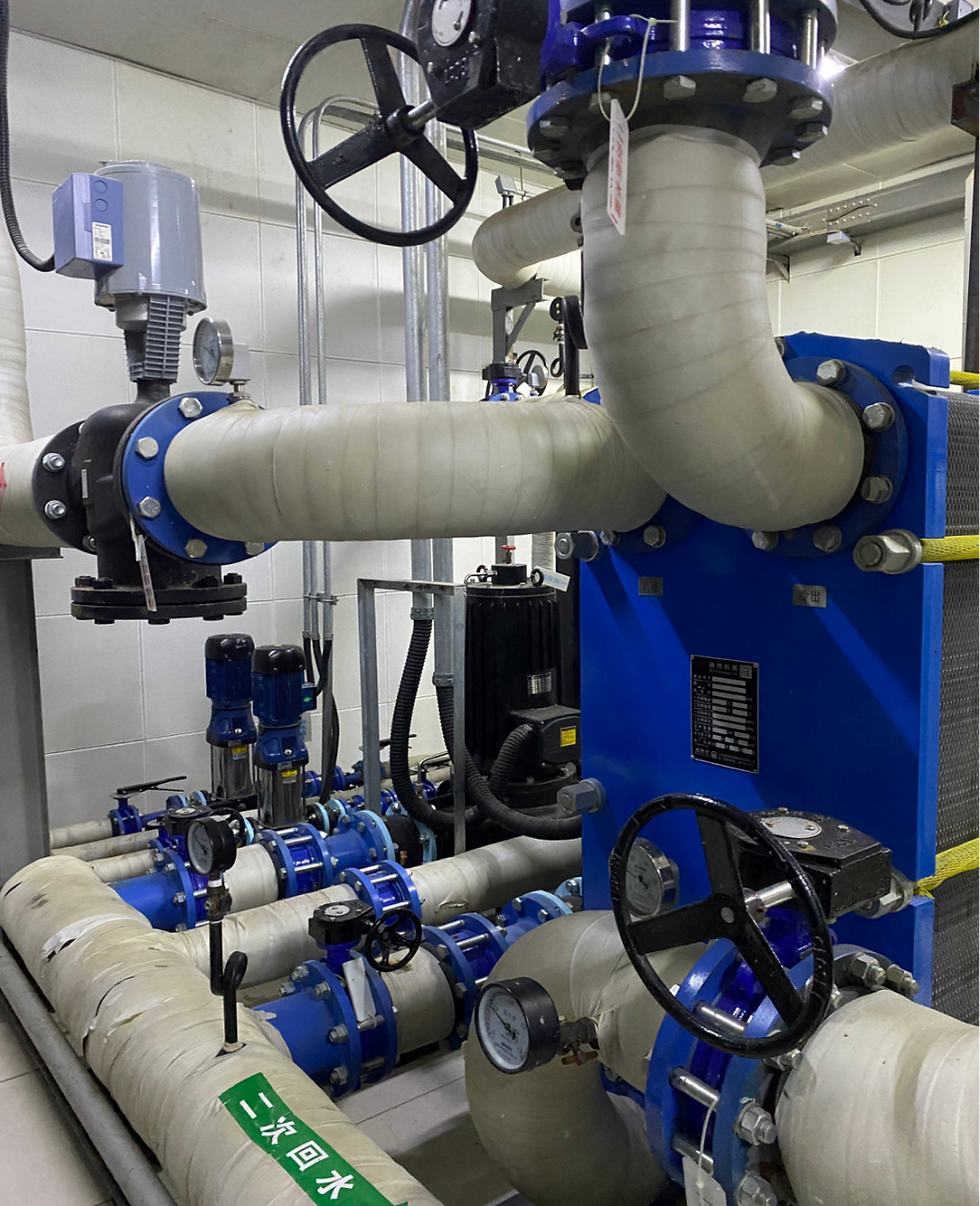
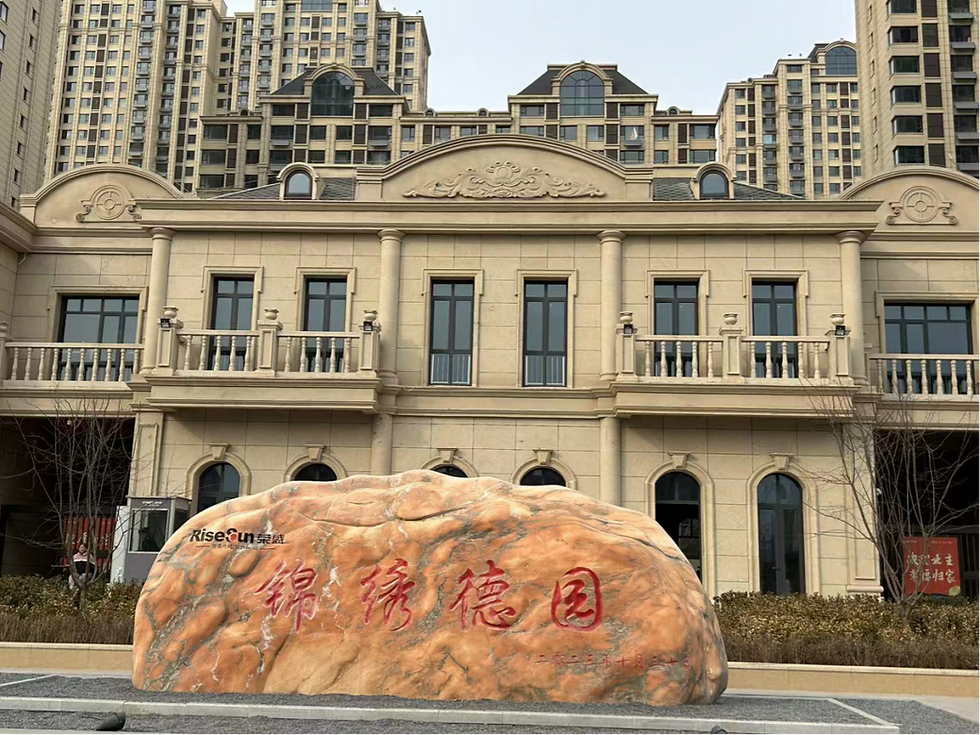
Central Heating Upgrade for the Beiyicheng Urban Village Redevelopment Project
The Beiyicheng Urban Village Redevelopment Project is part of a large-scale municipal initiative to replace outdated, decentralized heating systems with a modern, centralized district heating network. Serving approximately 350,000 square meters (3.77 million sq. ft.) of residential space, the project was designed to improve energy efficiency, reduce emissions, and provide residents with reliable, comfortable heating while supporting long-term urban renewal objectives.
To meet these goals, the project implemented an intelligent plate heat exchanger system as the core of its district heating infrastructure. The solution combines high-efficiency heat transfer, remote monitoring, intelligent automation, and low-noise operation to create a modern heating network capable of meeting the demands of a densely populated residential environment.
The Challenge
Urban village redevelopment projects present a unique set of engineering challenges compared with conventional residential developments. High building density, diverse heating demands, limited equipment space, and aging infrastructure all increase the complexity of designing and operating an efficient district heating system.
For the Beiyicheng project, the heating solution needed to:
* Replace inefficient decentralized heating systems with a centralized district heating network
* Provide reliable heating across a high-density residential area
* Accommodate significant fluctuations in heating demand throughout the season
* Minimize construction time and disruption to residents
* Reduce operating noise in a densely populated environment
* Enable intelligent remote monitoring and long-term operational efficiency
The project required a solution that could improve both system performance and day-to-day management while supporting the city’s broader sustainability goals.
Our Solution

To address these challenges, the project adopted a high-efficiency intelligent plate heat exchanger system featuring advanced automation, adaptive hydraulic control, and integrated cloud-based monitoring.
The system continuously adjusts operating parameters in response to real-time heating demand, ensuring efficient heat transfer under both peak winter conditions and partial-load operation. Intelligent hydraulic balancing technology automatically matches heat supply to varying user demand, eliminating common district heating issues such as uneven heat distribution between buildings and excessive pumping energy consumption.
A fully integrated remote monitoring platform enables centralized supervision of the heat exchange station, allowing operators to monitor system performance, adjust operating parameters, analyze energy consumption, and receive automated fault notifications from a remote location. This unattended operating model significantly improves maintenance efficiency while reducing labor costs.
To meet the project’s demanding construction schedule, the heat exchanger system utilizes a compact modular design that is factory assembled and tested prior to delivery. This approach shortens onsite installation and commissioning time while minimizing disruption to nearby residents.
Low-noise circulation pumps, vibration isolation measures, and optimized equipment layout further reduce operational noise, making the system well suited for densely populated urban neighborhoods where environmental comfort is an important consideration.
Equipment Supplied
* Application: Municipal District Heating & Urban Redevelopment
* Heating Service Area: 350,000 m² (3.77 million sq. ft.)
* Technology: Intelligent Plate Heat Exchanger System
* Control System: Adaptive Load-Based Operation and Hydraulic Balancing
* Monitoring: Cloud-Based Remote Monitoring and Automated Fault Diagnostics
* Key Features: Low-Noise Operation, Modular Construction, Variable-Speed Pump Control
* Installation: Factory-Assembled Modular Heat Exchange Station
* Operation Mode: Unattended Intelligent Heat Exchange Station
Results
The completed district heating system successfully transformed the community’s heating infrastructure into a modern, energy-efficient network capable of supporting long-term urban development.
Key project benefits include:
* Reliable and uniform heating throughout the service area
* Significant reductions in thermal energy consumption and pumping power
* Improved hydraulic balance across the district heating network
* Faster project delivery through modular equipment design
* Reduced disruption to residents during installation
* Quiet, environmentally friendly operation in a high-density neighborhood
* Remote monitoring and intelligent system management
* Lower operating and maintenance costs through automated operation
The project demonstrates how intelligent district heating technology can improve energy efficiency, operational reliability, and resident comfort while supporting large-scale municipal infrastructure modernization.
Why This Project Matters
Many cities around the world are replacing aging, decentralized heating systems with modern district heating networks as part of broader urban renewal and sustainability initiatives. These projects require solutions that not only improve energy efficiency but also minimize disruption during construction and simplify long-term operation.
The Beiyicheng Urban Village Redevelopment Project illustrates how intelligent plate heat exchanger systems can support this transition by combining advanced heat transfer technology, smart automation, remote monitoring, and modular construction into a single integrated solution. The project serves as a strong reference for municipalities, district energy operators, and engineering firms seeking reliable, energy-efficient heating solutions for high-density urban environments.