Precision HVAC Heat Exchanger Solution for the Renmin University of China Library
The Renmin University of China (RUC) is one of China’s leading research universities and a member of the country’s prestigious Double First-Class Initiative. As one of the university’s most important academic facilities, the RUC Library serves as a central resource for teaching, research, and cultural preservation.

Covering approximately 56,000 square meters (602,800 sq. ft.), the library includes reading rooms, collaborative study areas, archival collections, rare book storage, and research facilities. These diverse spaces require precise environmental control to protect valuable collections while providing a comfortable learning environment for students, faculty, and researchers.
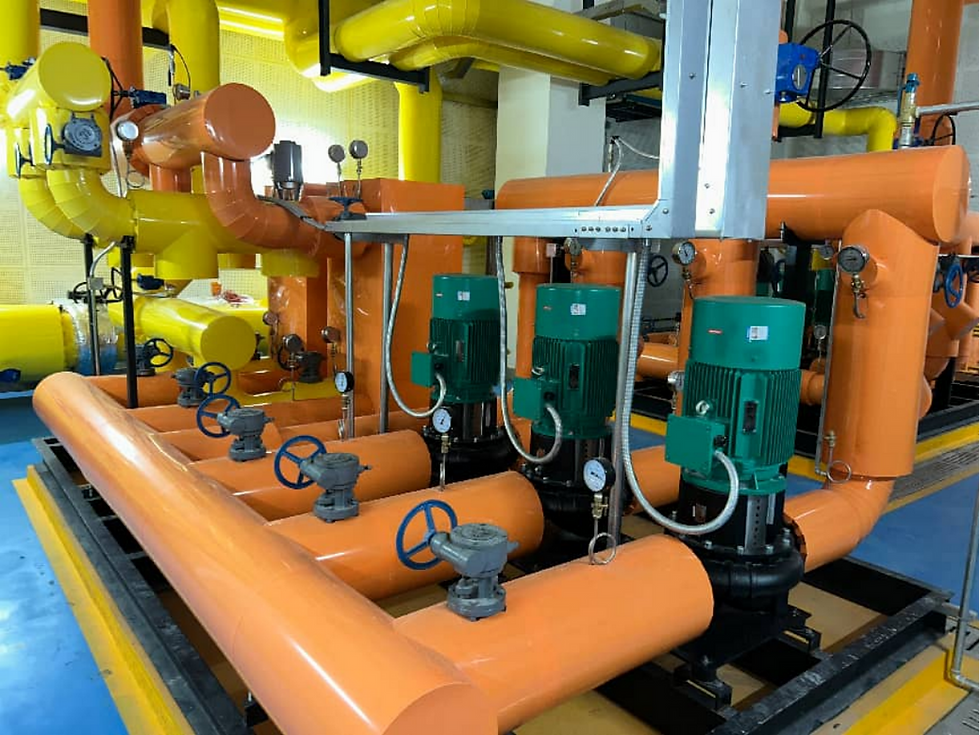
To meet these demanding requirements, the university selected two intelligent HVAC heat exchanger systems designed to deliver stable temperature and humidity control, ultra-quiet operation, and long-term energy-efficient performance.
The Challenge
Unlike conventional office buildings, university libraries require highly stable indoor environments throughout the year. Even minor fluctuations in temperature or humidity can accelerate the deterioration of rare books, manuscripts, and archival materials, while excessive HVAC noise can negatively affect reading and research environments.
At the same time, modern academic libraries operate for extended hours and serve thousands of occupants daily, requiring HVAC systems capable of balancing preservation standards with occupant comfort and operational efficiency.
For the Renmin University Library, the HVAC solution needed to:
* Maintain stable year-round temperature and humidity
* Protect valuable books, archives, and research materials
* Provide quiet operation suitable for reading and study spaces
* Support different environmental requirements across multiple functional areas
* Deliver reliable long-term performance with minimal maintenance
* Reduce energy consumption while supporting continuous operation
The project required a climate control solution capable of meeting both preservation-grade environmental standards and the everyday needs of a modern academic library.
Our Solution

To satisfy these demanding operational requirements, the project implemented two intelligent HVAC heat exchanger systems featuring advanced environmental control, energy-efficient heat transfer, and intelligent automation.
The systems continuously regulate both temperature and humidity, maintaining stable indoor conditions throughout the year to help preserve valuable library collections while creating a comfortable environment for building occupants.
Intelligent control algorithms automatically adjust system performance based on occupancy levels, seasonal weather conditions, and the varying environmental requirements of different functional zones. Reading rooms, archive storage, collaborative learning spaces, and administrative areas each receive climate control tailored to their specific operational needs.
Recognizing the importance of a quiet study environment, the HVAC systems were designed for low-noise, low-vibration operation, ensuring that mechanical equipment does not interfere with learning, research, or library services.
To simplify long-term facility management, the systems also incorporate intelligent monitoring and automated operational controls that improve reliability while reducing maintenance requirements and overall energy consumption.
Together, these technologies provide a stable, efficient, and highly controlled indoor environment suitable for both academic activities and long-term preservation of valuable collections.
Equipment Supplied
* Application: University Library HVAC System
* Facility Size: 56,000 m² (602,800 sq. ft.)
* HVAC Heat Exchanger Units: 2 Intelligent Systems
* Technology: Central HVAC Heat Exchanger Solution
* Control Features: Precision Temperature and Humidity Control
* Monitoring: Intelligent System Monitoring and Automated Operation
* Key Features: Low-Noise Design, Multi-Zone Climate Control, High Energy Efficiency
Results
Following commissioning, the HVAC system successfully established a stable indoor environment that supports both academic activities and long-term collection preservation.
Project benefits include:
* Precise year-round temperature and humidity control
* Enhanced protection for books, archives, and special collections
* Comfortable indoor conditions for students and faculty
* Quiet operation suitable for study and research environments
* Improved HVAC energy efficiency
* Reduced operating and maintenance costs
* Reliable long-term performance through intelligent automation
* Simplified system management and monitoring
The completed system provides the university with a modern HVAC solution that combines environmental precision, operational reliability, and energy efficiency while supporting the library’s educational and research mission.
Why This Project Matters
Libraries, archives, and research facilities require HVAC systems that go beyond conventional comfort cooling and heating. Protecting valuable collections demands precise environmental control, while modern academic buildings must also provide comfortable spaces for learning, collaboration, and research.
The Renmin University of China Library demonstrates how intelligent HVAC heat exchanger technology can successfully balance these objectives through precision temperature and humidity control, energy-efficient operation, and quiet, reliable performance.
The project serves as an excellent reference for universities, public libraries, museums, archives, cultural institutions, and research centers seeking advanced HVAC solutions capable of protecting valuable assets while improving occupant comfort and reducing operating costs.